
In the B2B world, high-quality leads are the lifeblood of business growth. Unlike B2C marketing, where emotional, quick-impulse buys are common, B2B sales cycles are long, expensive, and involve multiple decision-makers. You aren’t just selling a product; you are building a high-value partnership.
Because the stakes are so high, many B2B companies look to outsource their growth strategies. However, finding the right partner can feel like searching for a needle in a haystack. Walk into any digital marketing agency, and they will all promise you the world. They will show you flashy presentations, talk about impressions, and promise to flood your pipeline.
But how do you separate the agencies that just talk big from the ones that actually deliver revenue?
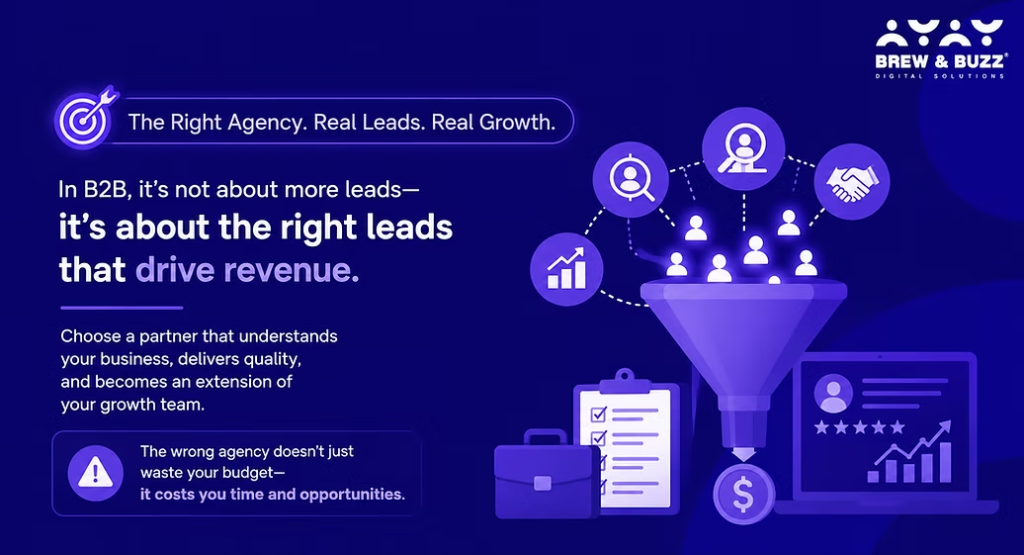
Choosing the wrong agency doesn’t just cost you money—it costs you months of wasted time and market opportunities. Let’s break down exactly how to evaluate and choose a digital marketing agency that specializes in b2b lead generation and can actually move the needle for your business.
1. Look for B2B Specialists
The very first filter you need to apply is specialization. B2B marketing requires a fundamentally different mindset than B2C marketing.
If an agency spends most of its time running Instagram ads for clothing brands or managing social media for local restaurants, they are likely not equipped to handle your complex sales cycle. They are used to optimization metrics like cost per click or likes.
In B2B, you need an agency that speaks your language. They should understand concepts like Account-Based Marketing (ABM), Customer Acquisition Cost (CAC), and Lead-to-Opportunity conversion rates. Ask them point-blank: What percentage of your current client portfolio is strictly B2B?
2. Evaluate Their Strategy for B2B LinkedIn Marketing
LinkedIn is the undisputed king of professional networking and B2B growth. Any agency worth its salt should have a mature, sophisticated strategy for b2b linkedin marketing.
Don’t just settle for an agency that promises to post three times a week on your company page. Organic company page reach on LinkedIn is notoriously low. Instead, look for an agency that understands how to leverage:
- Executive Thought Leadership: Building the personal profiles of your founders or leadership team to drive organic trust.
- Highly Targeted Paid Ads: Using LinkedIn’s rich demographic data to target specific job titles, company sizes, and industries.
- Matched Audiences: Uploading your ideal account lists directly into LinkedIn to target decision-makers across your dream companies.
If they treat LinkedIn like it’s just another Facebook, keep looking. They need to know how to navigate the nuances of professional networking.
3. Ask How They Define a Lead
This is where the biggest disconnect happens between agencies and businesses. If you don’t define what a lead is before signing a contract, you are set up for frustration.
A low-quality agency will consider anyone who downloads a free checklist or fills out a basic contact form as a lead. They will hand over a list of 50 email addresses, claim victory, and demand their check. Meanwhile, your sales team is frustrated because those “leads” have zero intent to buy.
A great agency focuses on Qualified Leads. They will work with you to define
- Marketing Qualified Leads (MQLs): Prospects who fit your target profile and are showing active interest.
- Sales Qualified Leads (SQLs): Prospects who are ready to have a direct conversation with your sales team.
Make sure the agency’s goals align with your actual revenue goals, not just vanity metrics.
4. Audit Their Case Studies and Real Results
An agency should practice what they preach. Ask to see case studies specifically related to b2b lead generation. When reviewing these case studies, look past the beautiful charts and pay attention to the actual data.
- Did they actually increase pipeline revenue, or just website traffic?
- Can they show a clear journey of how they took a client from zero leads to a steady stream of inquiries?
- Do they have experience in your specific industry or a similarly complex niche (like manufacturing, logistics, or SaaS)?
If an agency makes excuses about why they can’t show data, or if their case studies look incredibly vague, take it as a major red flag.
5. Pay Attention to Their Tech Stack and Tracking
In 2026, marketing is completely driven by data and technology. A great agency shouldn’t just guess what’s working; they should prove it. During your discovery calls, ask them what tools they use to track user behavior and capture data.
They should be highly proficient in setting up:
- Advanced tracking systems (such as Google Search Console, tracking pixels, and user behavior tools like Microsoft Clarity).
- CRM integrations (HubSpot, Salesforce, etc.) to ensure that the leads they generate seamlessly flow into your sales pipeline.
- Closed-loop reporting, so you can trace a closed deal all the way back to the exact piece of content or ad that generated it.
If they cannot explain how they plan to track and measure your ROI, they will not be able to optimize your campaigns effectively.
Frequently Asked Questions
What is the difference between B2B and B2C digital marketing?
B2B (Business-to-Business) marketing focuses on logical, data-driven buying decisions made by groups of professionals over a long period. B2C (Business-to-Consumer) marketing typically targets individual emotions, focusing on quick conversions and shorter sales cycles.
Why is b2b linkedin marketing so critical for lead generation?
LinkedIn holds the most accurate professional demographic data in the world. It allows you to target prospects by their exact job title, company size, industry, and seniority level, making it the most efficient platform to reach B2B decision-makers.
How long does it take to see results from a B2B lead generation campaign?
While paid ads can generate traffic almost instantly, a mature, optimized B2B lead generation strategy typically takes 3 to 6 months to consistently produce high-quality, qualified leads. This timeframe allows for proper audience testing, data collection, and content optimization.
Should we hire an agency or build an in-house marketing team?
Building an in-house team gives you total control, but it is expensive and time-consuming to hire specialists for SEO, paid ads, design, and copywriting. Hiring an experienced agency gives you instant access to a full team of experts and advanced marketing tools for a fraction of the cost.