
Why Viral Content Doesn’t Always Convert in Digital Marketing
- BrewAndBuzz Digital Services LLP
- Apr 29
- 3 min read

We’ve all seen it happen. A brand posts a quirky 15-second video, it gets 5 million views, thousands of shares, and everyone is popping champagne in the marketing department. But when the weekly sales report comes in? Crickets.
It’s the great paradox of digital marketing Going viral is like throwing a massive party where everyone shows up for the free snacks, but nobody stays to buy the house. If you’ve ever wondered why your high-reach posts aren't moving the needle, you’re not alone.
Let’s dive into why "fame" doesn't always equal "fortune" and how a strategic approach to content marketing can turn those lurkers into loyal customers.

The "Sugar Rush" of Virality vs. Substance
Viral content is often built on high-arousal emotions—humor, shock, or cute animals. While these are great for brand awareness, they rarely address the customer’s pain points.
The Mismatch: A hilarious meme might get a million shares, but if it doesn't relate to your product, the people sharing it aren't thinking about buying from you; they're thinking about the joke.
The Solution: Effective content marketing focuses on "Intent." Instead of just being entertaining, your content should solve a problem or answer a question that your target audience is actually asking.
Audience Alignment: Quality Over Quantity
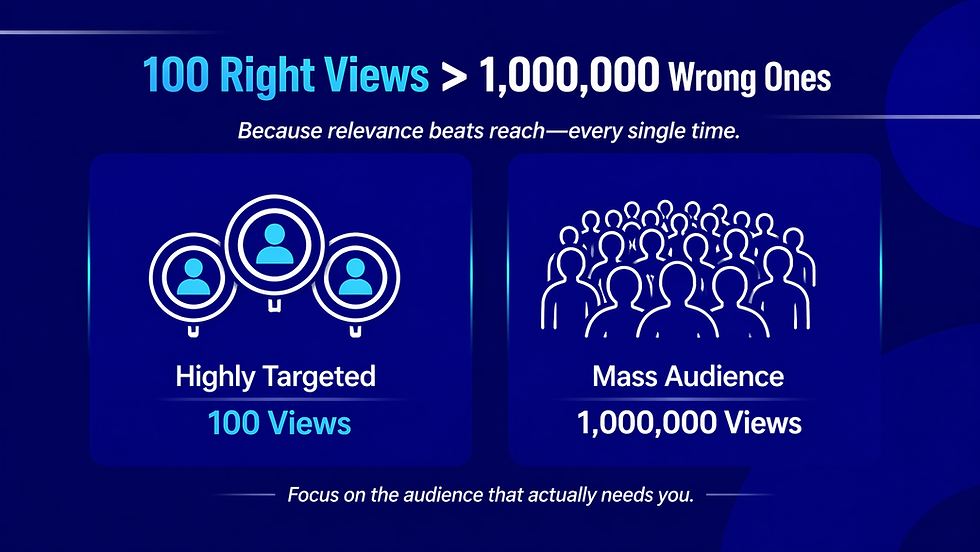
In the world of digital marketing, reach is a vanity metric. If you sell high-end enterprise software but your video goes viral among teenagers on TikTok, your conversion rate will stay at zero.
What Actually Converts?
If virality isn't the goal, what is? The most successful brands use a "Full-Funnel" strategy. Here’s what drives real revenue:
A. Educational Content
People trust experts. When you provide value through deep-dive blogs, whitepapers, or tutorials, you aren't just a funny brand—you’re a solution. This builds the authority necessary for content marketing to thrive.
B. Strategic Social Proof
Case studies and testimonials might not go "viral," but they are conversion magnets. Seeing a real human solve a real problem with your product bridges the gap between awareness and action.
C. Strong Calls to Action (CTA)
Viral content often forgets to tell the user what to do next. Every piece of your digital marketing puzzle should have a clear next step:
Download the guide
Book a free consultation
Shop the collection
Final Thought
Don't get us wrong—virality isn't bad. It’s a fantastic way to fill the top of your marketing funnel. However, it’s the consistent, high-quality, and targeted content marketing that actually pays the bills.
Stop chasing the "big hit" and start building a bridge to your customers.
Frequently Asked Questions (F&Q)
Can viral content ever lead to sales?
Absolutely! But only if the viral hook is intrinsically linked to the product’s value. If the "viral" element is the product itself in action, the conversion path is much shorter.
How do I know if my digital marketing is working if I’m not going viral?
Look at your "Bottom of the Funnel" metrics. Are your email sign-ups increasing? Is your "Time on Page" high? Most importantly, is your conversion rate growing? These matter more than "Likes."
Should I stop trying to make viral videos?
Not necessarily. Just ensure that for every "fun" viral attempt, you have five pieces of "valuable" content that help your audience. Balance is the heart of a good digital marketing strategy.
How does SEO play into this?
While viral content is a spike, SEO-optimised content marketing is a "steady stream." Keywords and helpful articles keep bringing in leads long after a viral post has been forgotten.


Comments